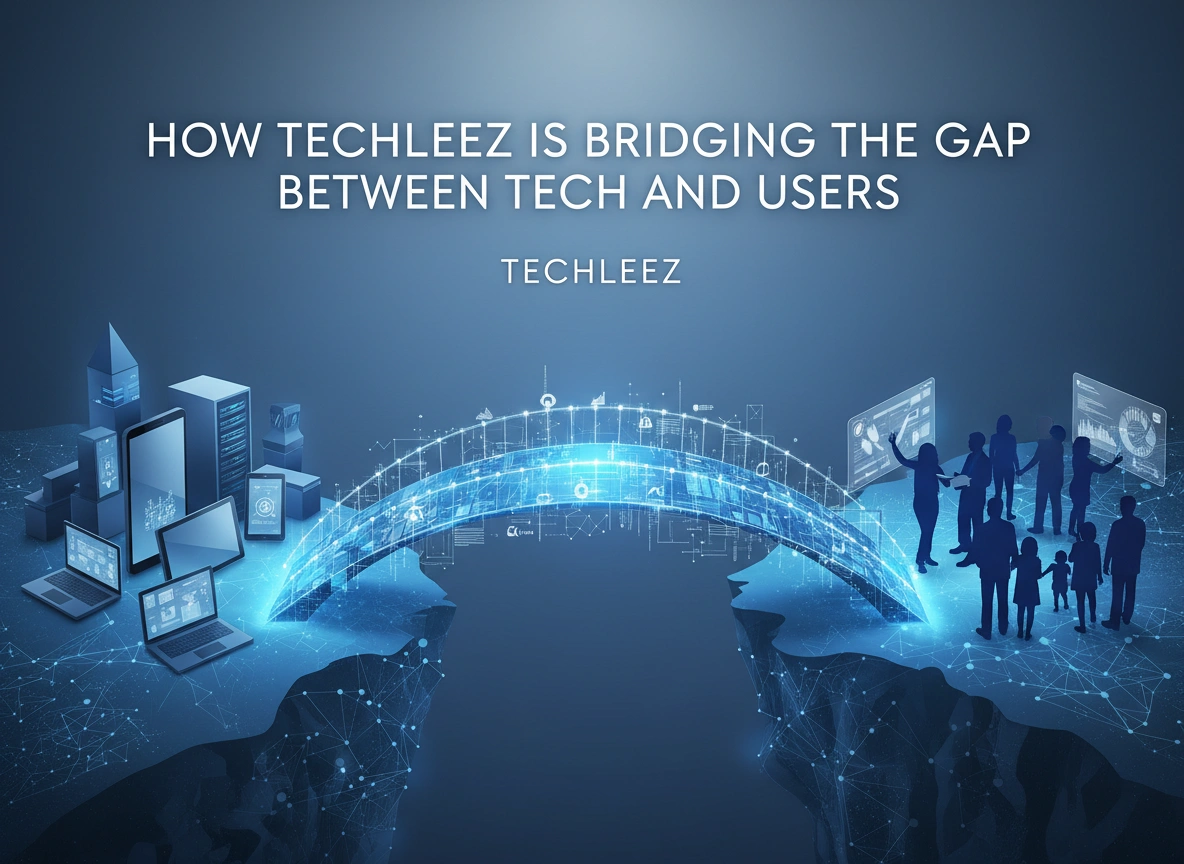

Technology advances at a breakneck pace. For developers and engineers, this speed is exciting. For the average user, however, it can feel overwhelming. New devices, updated software, and shifting digital landscapes often leave people feeling left behind rather than empowered. This disconnection—the gap between sophisticated technology and the people it is meant to serve—is a significant hurdle in the modern digital economy.
Techleez has emerged as a crucial player in solving this problem. By focusing on accessibility, user-centric design, and education, the company is not just building tools; they are building bridges. Their mission goes beyond deploying software. They aim to ensure that technology serves humanity, rather than the other way around.
This article explores how Techleez is dismantling barriers to entry and making complex digital ecosystems intuitive for everyday users.
The Complexity Crisis in Modern Tech
Before understanding the solution, we must look at the problem. The “complexity crisis” refers to the increasing difficulty users face when interacting with modern digital tools. A recent study on digital literacy suggests that nearly 70% of employees feel overwhelmed by the number of software applications they are required to use daily.
This friction leads to several negative outcomes:
- Reduced Productivity: Users spend more time troubleshooting than working.
- Digital Exclusion: Older generations or non-technical individuals are shut out of essential services.
- Security Risks: Confusion often leads to poor security hygiene, such as reusing passwords or ignoring updates.
Techleez identified these pain points early. Instead of adding more features to an already crowded market, they pivoted toward simplification. Their philosophy centers on the idea that the best technology is invisible—it works so seamlessly that the user doesn’t have to think about it.
Strategy 1: Radical Simplification of User Interfaces (UI)
The first frontier in bridging the gap is the User Interface (UI). Historically, “professional” software was synonymous with cluttered dashboards and endless dropdown menus. Techleez challenged this norm by adopting a “Radical Simplification” strategy.
Context-Aware Design
Techleez utilizes context-aware algorithms in their interface design. Instead of showing a user every possible tool at once, their platforms analyze user behavior to present only the relevant tools for the current task.
For example, if a user is drafting a report, the interface automatically hides advanced coding or data analysis widgets. This reduces cognitive load significantly. Users report feeling less anxious and more focused when the digital workspace adapts to their immediate needs.
Natural Language Processing (NLP)
Another key innovation is the integration of advanced NLP into navigation. Rather than memorizing complex command paths (e.g., File > Settings > Advanced > Network > Proxy), Techleez users can simply type or say, “Change my proxy settings.”
This shift from “command-based” interaction to “intent-based” interaction lowers the learning curve dramatically. It democratizes access to advanced features that were previously reserved for power users.
Strategy 2: Education Through “Just-in-Time” Learning
Traditionally, learning a new piece of technology required reading a dense manual or watching hours of tutorial videos. Techleez has reimagined this process through “Just-in-Time” (JIT) learning.
Micro-Learning Modules
Techleez embeds education directly into the workflow. When a user hovers over a new feature or encounters an error, the system provides a micro-lesson—usually a 30-second video or a short, interactive tooltip—explaining exactly how to proceed.
This approach respects the user’s time. It provides knowledge at the exact moment of need, which increases retention rates. Data from Techleez’s internal user satisfaction surveys indicates that users who engage with JIT modules are 40% more proficient after one week compared to those who attend traditional webinar training.
Gamified Digital Literacy
To encourage ongoing learning, Techleez gamifies the mastery of their tools. Users earn badges and certifications for exploring new functionalities. While this might sound trivial, it taps into basic psychological reward systems. It transforms the anxiety of learning something new into a sense of achievement.
By treating digital literacy as a journey rather than a prerequisite, Techleez ensures that users grow alongside the technology.
Strategy 3: Human-Centric Customer Support
In an era of automated chatbots and endless support tickets, Techleez differentiates itself by doubling down on human-centric support. While they utilize AI for basic queries, they recognize that technology gaps are often emotional as well as technical.
The “Empathy First” Protocol
Techleez support staff are trained not just in technical troubleshooting, but in the “Empathy First” protocol. This training emphasizes understanding the user’s frustration before attempting to fix the issue.
When a user feels heard, their resistance to the technology lowers. They become more open to learning the solution. This approach builds trust. Users stop viewing the software as an adversary and start viewing Techleez as a partner.
Community-Led Solutions
Techleez has fostered a robust user community where peer-to-peer support is incentivized. They realized that often, the best person to explain a feature to a teacher is another teacher, not a software engineer. By facilitating these connections through moderated forums and user groups, Techleez creates a translation layer where technical jargon is converted into industry-specific language.
Innovation Spotlight: The “Techleez Bridge” Initiative
Perhaps the most ambitious project is the “Techleez Bridge” initiative. This is a suite of accessibility tools designed specifically for underserved populations, including the elderly and those with disabilities.
Voice-First Accessibility
Recognizing that keyboards and mice can be barriers for those with motor impairments or arthritis, Techleez integrated voice-first controls deeply into their OS layers. Unlike standard voice assistants that handle simple web searches, the Techleez Bridge allows for complex document editing and system management entirely through voice commands.
Legacy Mode for Seniors
For users who struggle with the constant visual changes of modern apps, Techleez introduced “Legacy Mode.” This feature allows the interface to retain a consistent, familiar layout even as the backend software updates. It prevents the disorientation that often occurs after a major software update, allowing users to maintain their habits and confidence.
The Business Case for Accessibility
Critics often argue that simplifying technology stifles innovation or alienates “power users.” However, Techleez has proven that accessibility is good business.
By lowering the barrier to entry, they have expanded their total addressable market. Small business owners who previously couldn’t afford a dedicated IT department can now manage their own digital infrastructure using Techleez’s simplified tools.
Furthermore, retention rates are significantly higher. When users feel competent and supported, they rarely churn. Techleez boasts a customer retention rate of over 90%, a figure that is the envy of the SaaS (Software as a Service) industry.
Looking Ahead: The Future of User-Tech Integration
As we look to the future, the gap between tech and users threatens to widen with the introduction of AI and quantum computing. Techleez is already positioning itself to handle this shift.
They are currently developing “explainable AI” interfaces. These will not only give users an answer generated by AI but also explain how the AI arrived at that conclusion in plain language. This transparency is vital for building trust in the next generation of automated tools.
Conclusion
The divide between technological capability and user capability is not inevitable. It is a design choice. For too long, the tech industry has prioritized raw power and feature lists over usability and comprehension.
Techleez is proving that we can have both. By employing context-aware design, embedding education into the workflow, prioritizing human support, and building dedicated accessibility features, they are effectively bridging the gap.
For the everyday user, this means less frustration and more freedom. For the industry, it offers a blueprint for how to build sustainable, inclusive products. As technology continues to permeate every aspect of our lives, the work Techleez is doing ensures that no one is left behind in the digital dark.
Please click here for more info