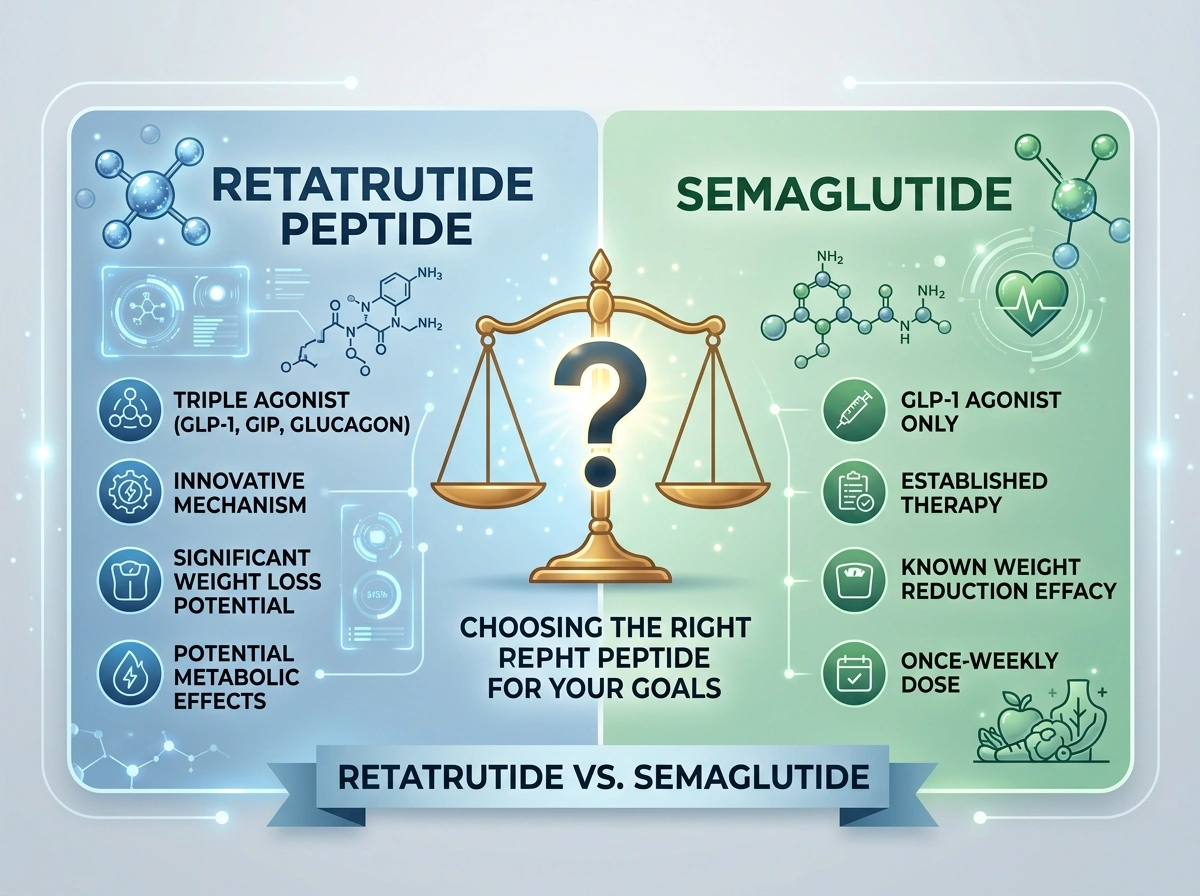

Choosing a weight management treatment can feel overwhelming, especially when two promising options dominate the conversation. Retatrutide and semaglutide both target the body’s metabolic pathways, but they work in noticeably different ways. One has reshaped obesity care over the past few years. The other is an emerging contender generating excitement in clinical research.
In this guide, you’ll learn how each compound works, what the clinical trials reveal, the side effects to expect, and who tends to benefit most from each. By the end, you’ll have a clearer sense of which option may align with your personal goals.
A Quick Introduction to Both Compounds
Semaglutide is a well-established medication used for type 2 diabetes and chronic weight management. It belongs to a class of drugs called GLP-1 receptor agonists, and it’s widely recognized under brand names used in clinics worldwide.
Retatrutide is newer and still under investigation. It’s a triple-agonist peptide that targets three different receptors at once. Researchers are studying it closely because early results suggest it may push weight loss outcomes beyond what current treatments achieve. You can explore more about the retatrutide peptide and its developing research profile through dedicated resources.
Both compounds share a common goal: helping the body regulate appetite, blood sugar, and metabolism more effectively. The difference lies in how many pathways each one activates.
How Each Compound Works
Understanding the mechanism of action helps explain why these two options produce different results.
Semaglutide: A Single-Target Approach
Semaglutide mimics GLP-1, a hormone your gut naturally releases after eating. By activating GLP-1 receptors, it:
- Slows how quickly your stomach empties
- Reduces appetite and food cravings
- Supports steady insulin release
- Helps lower blood sugar levels
The result is a feeling of fullness that lasts longer, which naturally leads to eating less. This focused, single-pathway design has made semaglutide reliable and well-studied.
Retatrutide: A Triple-Target Approach
Retatrutide activates three receptors instead of one. It works on GLP-1, GIP (glucose-dependent insulinotropic polypeptide), and glucagon receptors at the same time.
Here’s why that matters:
- GLP-1 reduces appetite and supports insulin function
- GIP enhances insulin response and may improve how the body handles fat
- Glucagon boosts energy expenditure, helping the body burn more calories
By combining these three actions, retatrutide aims to address weight loss from multiple angles. This broader approach is the main reason researchers are paying such close attention.
Key Differences Between the Two
The contrast becomes clear when you place them side by side.
|
Feature |
Semaglutide |
Retatrutide |
|---|---|---|
|
Receptor targets |
GLP-1 only |
GLP-1, GIP, glucagon |
|
Approval status |
Widely approved |
Investigational |
|
Primary use |
Diabetes and weight loss |
Weight loss research |
|
Mechanism |
Single-agonist |
Triple-agonist |
|
Track record |
Established |
Emerging |
Semaglutide offers a proven, accessible option backed by years of real-world use. Retatrutide represents the next step in metabolic research, with a more aggressive multi-pathway design that’s still being validated.
Clinical Trial Results and Weight Loss Outcomes
Numbers tell an important part of this story.
Semaglutide Outcomes
In major clinical trials, semaglutide helped participants lose around 15% of their body weight on average over roughly 68 weeks. For many people, this represents a meaningful and life-changing result. The consistency of these outcomes is one reason semaglutide became so popular.
Retatrutide Outcomes
Early-phase trials for retatrutide have generated headlines. In a Phase 2 study, participants taking the highest dose lost up to 24% of their body weight over 48 weeks. Some saw continued weight reduction without reaching a plateau by the study’s end.
These figures suggest retatrutide may outperform existing treatments. Still, it’s important to remember that these results come from earlier-stage research. Larger Phase 3 trials are needed before drawing firm conclusions.
A quick note: higher weight loss potential doesn’t automatically make one option “better” for everyone. Your health profile, goals, and tolerance matter just as much as the raw numbers.
Side Effect Profiles
Both compounds share similar side effects because they act on overlapping pathways.
Common Side Effects for Both
- Nausea
- Vomiting
- Diarrhea
- Constipation
- Reduced appetite
These effects are usually most noticeable when starting treatment or increasing the dose. For many people, they ease over time as the body adjusts.
What Sets Them Apart
Because retatrutide activates the glucagon receptor, it may influence heart rate and energy metabolism differently than semaglutide. Some trial participants reported a modest increase in heart rate.
Semaglutide’s longer track record means its side effect profile is better understood. With retatrutide still in trials, the full picture of long-term safety is still forming. This is a key consideration if predictability matters to you.
Who Each Option Is Best Suited For
The right choice depends on your situation, not just the statistics.
Semaglutide May Suit You If:
- You want a treatment with a strong, proven track record
- You’re managing type 2 diabetes alongside weight goals
- You prefer an option that’s widely available and well-documented
- You value predictable, well-understood results
Retatrutide May Appeal To You If:
- You’re interested in cutting-edge metabolic research
- Your weight loss goals are substantial
- You’ve had limited success with single-agonist treatments
- You’re comfortable with an option that’s still being studied
Keep in mind that retatrutide is not yet broadly approved. Access depends on clinical trials and ongoing research developments. Semaglutide, by contrast, is already prescribed in many settings.
How to Think About Your Decision
When weighing your options, focus on three core questions:
- What are your weight loss goals? Modest, steady progress or maximum reduction?
- What’s your tolerance for newer treatments? Do you prefer established science or emerging research?
- What does your health profile require? Diabetes, heart concerns, or other factors all play a role.
A conversation with a qualified healthcare provider remains essential. They can review your medical history, current medications, and goals to guide a safe, informed choice. No article can replace that personalized assessment.
Conclusion: Matching the Treatment to Your Goals
Both retatrutide and semaglutide offer powerful tools for weight management, but they serve slightly different needs. Semaglutide stands out for its proven results, wide availability, and well-understood safety profile. It’s a dependable choice for people who want results backed by years of evidence.
Retatrutide, with its triple-agonist design, shows remarkable early promise for those seeking greater weight loss potential. As research continues, it could become a major player in metabolic health.
Your best next step is simple: define your goals clearly, then discuss them with a healthcare professional. They can help you weigh the proven path against the emerging one and choose the option that fits your body and your future. The right treatment isn’t about chasing the biggest number, it’s about finding the approach that works for you.