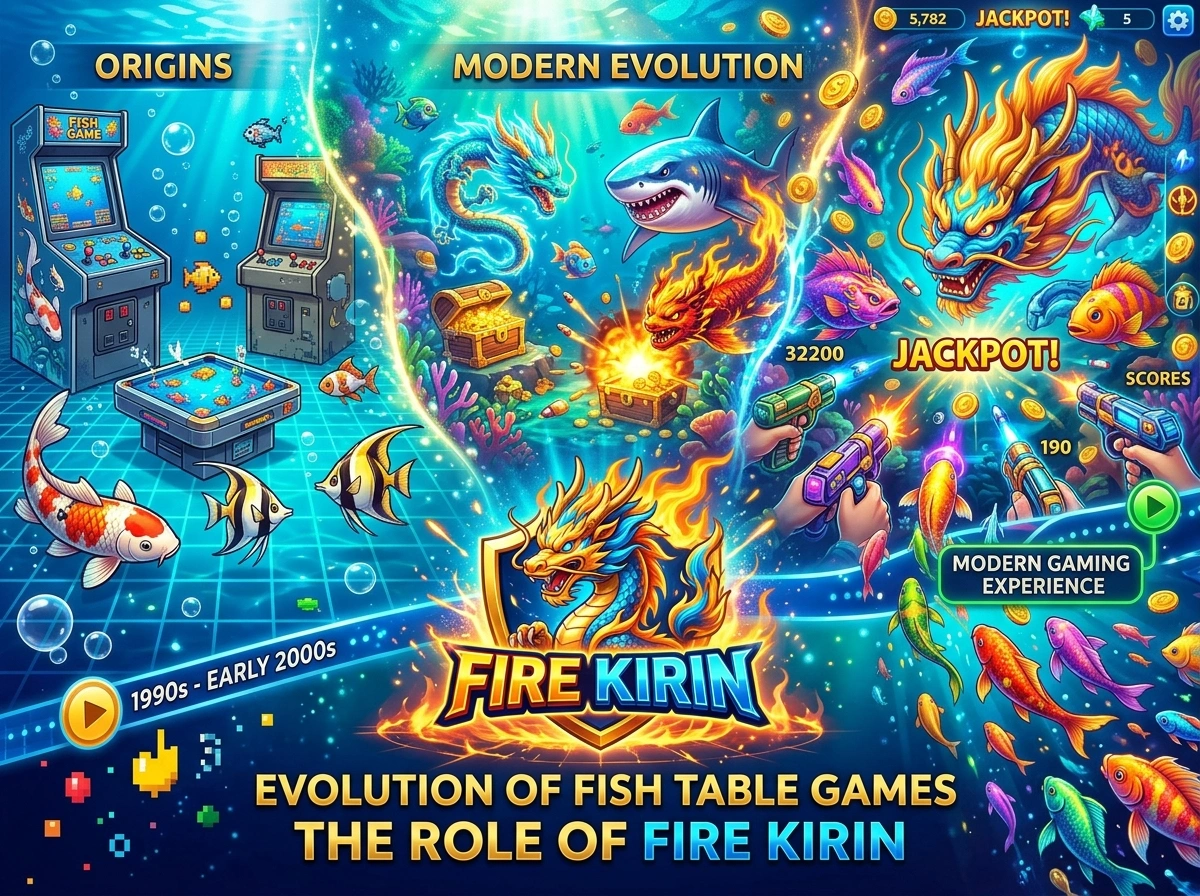

Fish table games have come a long way from their humble beginnings in crowded arcade halls. What started as a niche attraction has grown into a digital phenomenon enjoyed across the United States. These skill-based shooting games blend fast reflexes, vibrant graphics, and a competitive edge that keeps players coming back.
In this guide, we’ll trace the origins of fish table arcade games, follow their move from physical machines to online platforms, highlight the milestones that shaped them, and explore why American players love them today. Finally, we’ll look at where Fire Kirin fits into this modern landscape.
Where Fish Table Games Began
Fish table games trace their roots to East Asian arcades in the early 2000s. Developers wanted something more interactive than slot machines and more social than solo arcade titles. The answer was a tabletop game where multiple players sat around a large screen, controlling cannons to shoot at swimming fish, dragons, and other sea creatures.
Each creature carried a point value. Bigger, faster targets paid more but required more shots to defeat. This simple risk-and-reward loop gave players a sense of control that traditional gambling machines lacked. Skill mattered. The better your aim and timing, the better your results.
The Arcade Cabinet Era
The earliest fish table games lived inside massive cabinets. These machines often seated four to ten players at once, turning gameplay into a shared, competitive event. Friends and strangers gathered around the same screen, blasting away at colorful targets while chasing high-value bonuses.
The physical setup had real charm. Bright animations, booming sound effects, and the buzz of a crowd created an atmosphere that pulled people in. But the cabinets were expensive, heavy, and limited to specific locations. To play, you had to find a venue that owned one.
The Move From Arcades to Online Platforms
As internet speeds improved and smartphones became standard, the gaming industry shifted online. Fish table games followed. Developers realized they could recreate the multiplayer arcade experience on screens that people already carried in their pockets.
This transition changed everything. Players no longer needed to visit a physical arcade. They could log in from home, join a virtual table, and compete with others across the country in real time. The core gameplay stayed the same, but accessibility exploded.
Key Advantages of Going Digital
The online shift unlocked several benefits that the cabinet era simply couldn’t match:
- Anywhere access: Play from a phone, tablet, or computer without traveling.
- Larger player pools: Online tables connect users nationwide, making matches more dynamic.
- Frequent updates: Developers push new fish types, special weapons, and themed events without replacing hardware.
- Lower barriers: No need to own or maintain costly machines.
This combination made fish table games far more scalable. A single platform could now reach thousands of players at once, something a physical arcade could never do.
Key Milestones in the Evolution
The journey from arcade novelty to digital mainstay happened in clear stages. Understanding these milestones helps explain why the games feel so polished today.
- Multiplayer cabinets (early 2000s): The original shared-screen format introduced the shooting mechanic.
- HD graphics upgrade: Sharper visuals and smoother animations made gameplay more immersive.
- Mobile adaptation: Touchscreen controls replaced physical buttons, opening the games to smartphone users.
- Cloud-based platforms: Players gained access to persistent accounts, leaderboards, and cross-device play.
- Themed game libraries: Operators began bundling dozens of titles under one platform, giving players variety.
Each step added depth. The games grew from simple point-and-shoot entertainment into rich digital ecosystems with progression systems, special abilities, and competitive rankings.
Growing Popularity in the United States
Fish table games found a strong audience in the U.S. for several reasons. American players value entertainment that feels active and skill-driven rather than purely luck-based. The shooting mechanic delivers exactly that, rewarding precision and quick decision-making.
The country’s high rate of mobile and tech adoption also played a major role. With most adults carrying smartphones, the move to mobile-friendly platforms removed nearly every barrier to entry. People could try a game during a lunch break or a quiet evening at home.
Why American Players Connect With These Games
The appeal spreads across diverse audiences and regions for a few clear reasons:
- Social competition: Multiplayer tables tap into America’s love of friendly rivalry.
- Visual excitement: Bold graphics and dramatic effects keep sessions engaging.
- Skill expression: Players feel that improvement directly affects their performance.
- Quick sessions: Games fit easily into busy, varied lifestyles.
Because the United States covers such a wide range of cultures, ages, and preferences, the broad appeal of fish table games has helped them spread well beyond any single demographic.
Where Fire Kirin Fits Into the Modern Landscape
Among today’s online options, fire kirin has emerged as a recognizable name in the fish table gaming space. It represents the modern direction the industry has taken: a multi-game platform that bundles a variety of titles into one accessible experience.
Rather than offering a single game, this kind of platform gives players a library to explore. That variety matters in a market where users expect choice and fresh content. It reflects the same shift we saw in the broader evolution, moving from one fixed cabinet to a flexible, ever-expanding digital collection.
A Reflection of the Industry’s Growth
Platforms like this show how far fish table games have traveled. They combine the social, skill-based gameplay of the original arcades with the convenience of mobile and online access. Vibrant graphics, themed titles, and competitive elements all carry forward the qualities that made the genre popular in the first place.
For American players who enjoy interactive, fast-paced entertainment, this model fits naturally into the modern routine. It captures the spirit of the arcade era while delivering it through the devices people already use every day.
What to Keep in Mind
As with any online entertainment, players should always check the rules and regulations in their specific state. The legal landscape across the U.S. varies widely, and what applies in one region may differ in another. Staying informed and playing responsibly is the smartest approach.
Conclusion
Fish table games have evolved from bulky arcade cabinets into sleek, accessible online experiences. Along the way, they kept their core appeal: skill-based shooting, social competition, and eye-catching visuals. The shift to mobile and cloud platforms expanded their reach, and American players embraced them for their active, engaging style of play.
Today, platforms like Fire Kirin reflect where the genre is headed, bundling variety and convenience into one experience. If you enjoy interactive entertainment that rewards quick thinking and sharp aim, the modern fish table scene offers plenty to explore. Just remember to review your local regulations and play responsibly before you dive in.