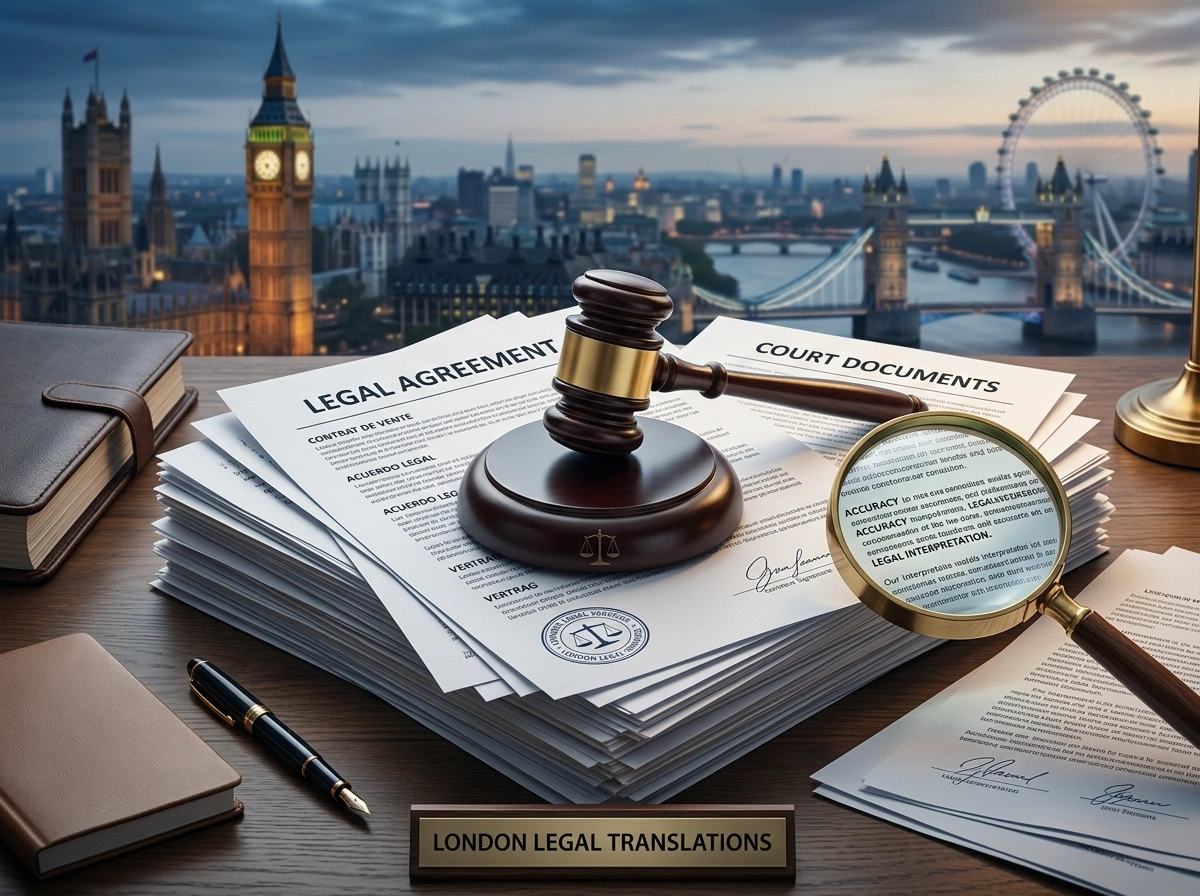

London operates as one of the most culturally and linguistically diverse cities on the planet. According to recent census data, over 100 languages are spoken across the capital’s 32 boroughs, with more than 2.2 million residents born outside the United Kingdom. This incredible variety of cultures brings a constant need for precise, reliable communication across language barriers.
For law firms, immigration consultants, and corporate legal departments, this linguistic diversity presents a unique operational hurdle. Legal professionals frequently handle foreign-language documents that must be translated for official use in the UK. A single mistranslated word in a contract, court transcript, or visa application can lead to dismissed cases, delayed immigration applications, or severe financial penalties.
Understanding the complexities of translating legal texts helps professionals protect their clients and maintain compliance with UK authorities. This guide outlines the most significant hurdles faced during the translation of official legal documents. We will explore how professional linguists navigate these obstacles to deliver accurate, legally binding translations that meet the strict standards of UK institutions.
The Complex Landscape of Legal Translation
The British legal system is highly specific, relying on centuries of common law precedent. When you introduce documents from foreign jurisdictions, the translation process becomes much more complicated than simply swapping words from one language to another.
Legal translation involves converting concepts that exist in one legal system into a target language where those exact concepts might not exist at all. Furthermore, the documents being translated in London span a massive range of use cases. A translator might work on birth certificates for UK Visas and Immigration (UKVI) in the morning and translate complex corporate litigation evidence for the Royal Courts of Justice in the afternoon.
Top Challenges in Legal Translation
Translating official documents requires a delicate balance of linguistic fluency and deep legal knowledge. Here are the primary challenges professionals face when translating legal texts.
Navigating Different Legal Systems
The biggest hurdle in legal translation is the frequent mismatch between legal systems. For example, a legal concept present in a French civil law contract might have no direct equivalent in English common law. A translator cannot simply translate the words literally, as this would produce text that makes no legal sense to a British judge or solicitor. They must find the closest functional equivalent without altering the original meaning of the document.
Decoding Complex Terminology
Legal documents are notorious for their dense, complex terminology. Terms often carry highly specific legal definitions that differ significantly from their everyday usage. Furthermore, legal texts frequently feature archaic phrasing, lengthy sentences, and complex syntax. Misinterpreting a single clause can completely change the liability outlined in a commercial contract or the outcome of a divorce decree.
Maintaining Strict Confidentiality
Legal documents inherently contain highly sensitive information. This might include personal financial records, confidential corporate strategies, or sensitive witness testimonies. Translators and translation agencies must ensure that this data is protected from unauthorized access or data breaches during the translation process.
Meeting UK Regulatory Standards
In the UK, institutions like the Home Office, the UKVI, and the courts have strict rules regarding foreign-language documents. A translation must be accompanied by a formal statement of truth or a certificate of accuracy from a qualified professional. If a translation lacks the proper certification format, UK authorities will reject the document outright, causing costly delays for the client.
How Experts Overcome These Challenges
Professional translation agencies employ specific strategies to ensure accuracy, security, and compliance. When law firms and individuals seek reliable legal translation services london, they rely on teams that have mastered these essential solutions.
Utilizing Subject-Matter Experts
Top-tier translation agencies do not just use fluent speakers; they use linguists with formal legal backgrounds. These subject-matter experts often hold law degrees or have extensive experience working within the legal sector. This background allows them to accurately interpret foreign legal concepts and adapt them appropriately for the UK legal system.
Developing Extensive Glossaries
To tackle complex terminology and ensure consistency across large projects, expert translators rely on translation glossaries. These glossaries define how specific legal terms should be translated for a particular client or case. When handling thousands of pages of corporate litigation evidence, a standardized glossary ensures that a specific contractual term is translated exactly the same way on page one as it is on page five hundred.
Implementing Robust Security Protocols
Professional translation services protect client data through strict security measures. This includes requiring all linguists to sign comprehensive Non-Disclosure Agreements (NDAs). Agencies also use secure, encrypted portals for document upload and delivery, ensuring that sensitive legal files are never exposed through unencrypted email channels.
Providing Accurate Certification
Expert translators understand exactly what the UK Home Office and British courts require. They provide certified translations that include a signed statement confirming the document is a true and accurate translation of the original. They also ensure their credentials and contact details are clearly listed, fulfilling all administrative requirements to guarantee the document is accepted without question.
Frequently Asked Questions
Can I translate my own legal documents if I am bilingual?
No. UK authorities, including the Home Office and the courts, require translations to be completed by an independent, qualified professional. Translating your own documents represents a conflict of interest, and institutions will reject the submission.
How long does a certified legal translation take?
Standard certified translations for common documents like birth or marriage certificates typically take one to three business days. However, complex legal contracts or large volumes of court evidence will require more time. Many professional agencies offer expedited services for urgent legal proceedings.
What is the difference between a certified translation and an apostille?
A certified translation includes a signed statement of accuracy from the translator or agency. An apostille is a government-issued certificate (usually provided by the Foreign, Commonwealth & Development Office) that verifies the authenticity of a document for international use. Some legal cases require both.
Securing Accurate Translations for Your Legal Needs
Navigating the complexities of foreign-language legal documents does not have to be a liability. By understanding the challenges of legal translation—from mismatched legal systems to strict certification requirements—you can better prepare your cases and protect your clients.
Always partner with qualified professionals who possess both linguistic expertise and deep legal knowledge. If you are preparing documents for UKVI, university admissions, or court proceedings, prioritize agencies that offer recognized certification and strict confidentiality protocols. Taking the time to secure a professional translation early in the process ensures your documents will be accepted by UK authorities the first time around.